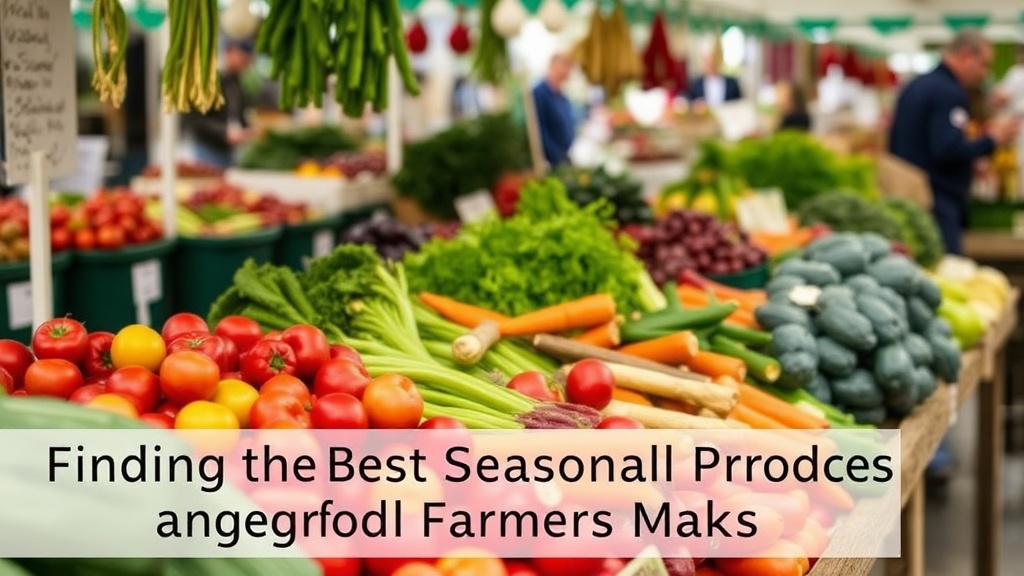
Finding the Best Seasonal Produce at Ingersoll Farmers Markets

You'll learn how to identify peak seasonal produce, when to visit the local markets in and around Ingersoll, and how to shop like a pro to get the best quality for your money. This guide breaks down the timing of Ontario's growing seasons so you don't end up paying full price for subpar vegetables.
When is the Best Time to Shop for Seasonal Produce in Ontario?
The best time to shop for seasonal produce depends entirely on the specific crop and the current Ontario growing season. In our region, the peak window for most fresh produce runs from late May through October. If you want the best selection, you need to time your visits to match the natural harvest cycles of Oxford County.
Spring is often a bit of a waiting game. You'll see more hardy greens and root vegetables early on, but the real magic happens once the ground warms up. By the time June hits, you'll start seeing the first real influx of berries and early leafy greens. It's a bit of a transition period—sometimes a bit muddy, but very rewarding if you know what to look for.
Summer is the heavy hitter. This is when the heavy hitters like sweet corn, heirloom tomatoes, and stone fruits arrive in abundance. If you're looking for that perfect way to upgrade making your own backyard picnic perfect in Ingersoll, this is your golden era. The produce is heavy, juicy, and actually tastes like something grown in dirt rather than a shipping container.
Autumn brings the transition to hearty vegetables. Think squash, pumpkins, and apples. This is a great time to stock up on items that have a longer shelf life. The weather turns, the colors change, and the produce becomes much more durable. It's a different kind of shopping experience than the frantic energy of a July market day.
| Season | Typical Produce | Best For... |
|---|---|---|
| Spring | Asparagus, Radishes, Spinach | Light meals and salads |
| Summer | Corn, Tomatoes, Peaches, Berries | Grilling and fresh desserts |
| Fall | Squash, Apples, Potatoes, Apples | Roasting and hearty stews |
How Do I Know if the Produce is Actually Fresh?
To know if produce is fresh, you must look for vibrant color, firm texture, and a lack of bruising or soft spots. A quick touch test is often more reliable than a visual check alone. For example, a tomato should feel heavy for its size and have a slight give, but it shouldn't feel mushy or dented.
Don't be afraid to use your senses. If you're buying strawberries, they should be a deep, uniform red. If you see white or green near the stem, they weren't picked at peak ripeness. It's a common mistake to grab the first basket you see—don't do that. Take a second to look at the bottom of the container too. Sometimes the best fruit is hidden under the top layer.
When it comes to leafy greens, look for crisp edges. If the edges of your kale or lettuce are limp or turning brown, the shelf life is already halfway gone. It's a simple way to ensure you aren't wasting money on something that will wilt in your fridge by tomorrow morning. (I've learned this the hard way more than once.)
If you're looking for more tips on local food, you might want to check out my previous post on getting your local household groceries sorted in Ingersoll. It covers much of the same ground regarding local availability.
The "Touch and Smell" Rule
- Melons: Should smell sweet at the stem end and feel heavy.
- Peaches: A slight softness is good, but avoid any "leaking" juice.
- Herbs: Should be bright and aromatic; avoid anything that looks slimy.
- Root Veggies: Look for firm skin and no visible sprouts.
How Much Does Local Produce Cost Compared to Grocery Stores?
Local produce prices fluctuate based on the season and current supply, but they are often comparable to or slightly higher than big-box retailers when you factor in the superior quality. While a bag of onions at a discount grocer might be cheaper, the flavor profile of a local onion is a different beast entirely. You're paying for the lack of transport-related degradation.
Here's the thing: you aren't just paying for the food; you're paying for the freshness. A grocery store's "fresh" strawberry might have traveled 2,000 kilometers in a refrigerated truck. That's a long way to travel for a piece of fruit. At a local market, that berry likely left a field in Oxford County yesterday. The difference in taste is massive.
There are times when local can be more expensive. During the "shoulder seasons" (the gaps between harvests), the supply is lower, so prices might spike. But during the height of summer, you can often find incredible deals on bulk items like berries or corn. It's smart to shop when the supply is high to get the best value.
One way to keep costs down is to buy what is "in season." If you try to find a perfect cucumber in the middle of a freezing January, you'll pay a premium for a mediocre product. Stick to the seasonal calendar, and your wallet will thank you. For more information on agricultural standards and seasonal availability, you can check out the Wikipedia page on seasonal food.
What Should I Bring to the Farmers Market?
Bring reusable bags, small denominations of cash, and a sturdy basket to make your market trip successful. Most vendors in our area are incredibly friendly, but they aren't always set up to handle complex digital transactions or heavy lifting. Being prepared makes the experience smoother for everyone.
I always carry a few different types of bags. A heavy-duty canvas tote for heavier items like potatoes or squash, and smaller mesh bags for delicate things like berries or herbs. This prevents the heavier stuff from crushing the light stuff at the bottom of your bag. It's a small detail, but it saves a lot of heartache when you get home.
Also, bring some small change. While many vendors now accept various digital payments, there is still a significant number of farmers who prefer cash or direct e-transfers. It's much faster to settle up and move on if you have the exact amount ready to go. It also helps keep the lines moving during those busy Saturday mornings.
If you're planning on buying meat or dairy, bring a cooler. It's a common mistake to wander around the market for an hour after buying your milk or eggs, only to find them lukewarm by the time you get home. Keeping your temperature-sensitive items cold is vital for food safety.
The local community thrives on these small interactions. Whether you're chatting with a vendor about their growing methods or just grabbing a coffee while you browse, the market is about more than just a transaction. It's a way to connect with the people who actually feed our community. It's a great way to stay engaged with the local area, much like how you might get involved with local governance.
The next time you head out, don't just go for the shopping. Go for the experience. Look for the colors, smell the fresh herbs, and talk to the people behind the stalls. You'll find that the best produce isn't just about the taste—it's about knowing exactly where it came from.
Steps
- 1
Check the Seasonal Calendar
- 2
Visit During Peak Morning Hours
- 3
Bring Reusable Bags and Small Change
- 4
Ask Growers About Harvest Timing